Navratri is not just a festival—it’s a nine-day celebration of colors, energy, and devotion. Each day is associated with a unique color that reflects the power and blessings of Goddess Durga.
Here’s the thing most folks miss, though
These color choices aren’t just about keeping up appearances. They’re thought to impact how you feel. They may affect how energized you are and even your spiritual well-being. If you’re gearing up for Navratri 2026, this guide to the day’s colors will help you get your outfit, mood, and devotion just right.
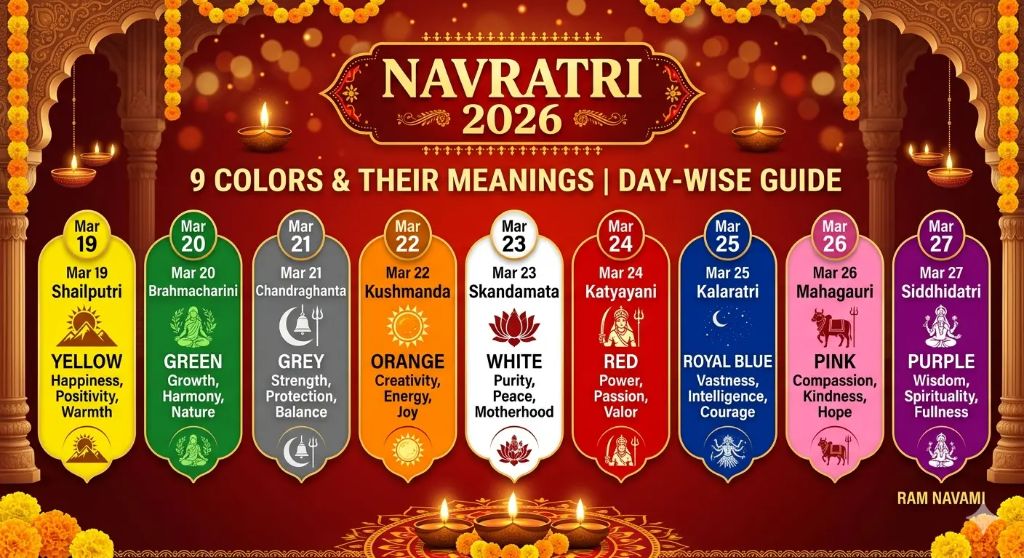
Day-by-Day Color Guide for Chaitra Navratri 2026
Day 1: Yellow (Maa Shailputri) Thursday, March 19
The festival kicks off with Yellow, a hue that radiates brightness, happiness, and cheer. Much like the sun, it signifies the start of a journey and the warmth of the Divine Mother’s blessing.
Day 2: Green (Maa Brahmacharini) Friday, March 20
Green, a color often associated with nature and growth, reflects the peace and calm of the Goddess in her meditative state. This color is also connected to new beginnings and the natural cycles of life.
Day 3: Grey (Maa Chandraghanta) Saturday, March 21
Grey embodies the power of a mind that has undergone transformation. It symbolizes the annihilation of malevolence and the equilibrium of a warrior who maintains composure, even when faced with adversity.
Day 4: Orange (Maa Kushmanda) Sunday, March 22
Orange embodies creativity, joy, and the sun’s vibrant energy. Maa Kushmanda, with her “silent smile,” is said to have birthed the universe, and Orange captures that divine essence of life.
Day 5: White (Maa Skandamata) – Monday, March 23
White signifies purity, tranquility, and meditation. As the mother of Skanda, the war-god Kartikeya, this aspect of the Goddess personifies the selfless, untainted love of a mother.
Day 6: Red (Maa Katyayani) – Tuesday, March 24
Red, the hue of power and passion, is the Goddess’s favored color. It symbolizes her fierce warrior form, which vanquished the demon Mahishasura, representing action and energy.
Day 7: Royal Blue (Maa Kalaratri) – Wednesday, March 25
Royal Blue reflects the vastness of the cosmos and the immense power needed to dispel darkness. It symbolizes elegance and unmatched authority over the unknown.
Day 8: Pink (Maa Mahagauri) – Thursday, March 26
On Ashtami, we don Pink.
This hue signifies hope, social grace, and the gentle, loving essence of the Goddess who bestows all gifts.
Day 9: Purple (Maa Siddhidatri) – Friday, March 27
The festival reaches its zenith with Purple (or occasionally Deep Green). Purple embodies opulence, spiritual magnificence, and the attainment of all “Siddhis” (supernatural abilities). It symbolizes the apex of spiritual accomplishment.
Struggling with what to cook? Check out our Navratri Fasting & Food Guide
Why Do We Wear Specific Colors?
The tradition of “Navratri Colors” has evolved into a delightful shared experience. Beyond its religious meaning, it fosters a sense of unity and shared awareness. When a community dons the same color, it strengthens the festival’s common purpose: the victory of light over darkness.
Quick Styling Tips for 2026
- Today (Orange): Infuse your workspace with orange marigolds or wear an orange scarf to connect with Maa Kushmanda’s creative spirit.
- Tomorrow, think about a fresh white outfit. It’s a straightforward way to invite peace and clarity of thought as the week starts.
- For the Office: If a full traditional outfit isn’t feasible, small touches can still link you to the tradition. Think a tie, a bindi, or even a pocket square in the day’s color.