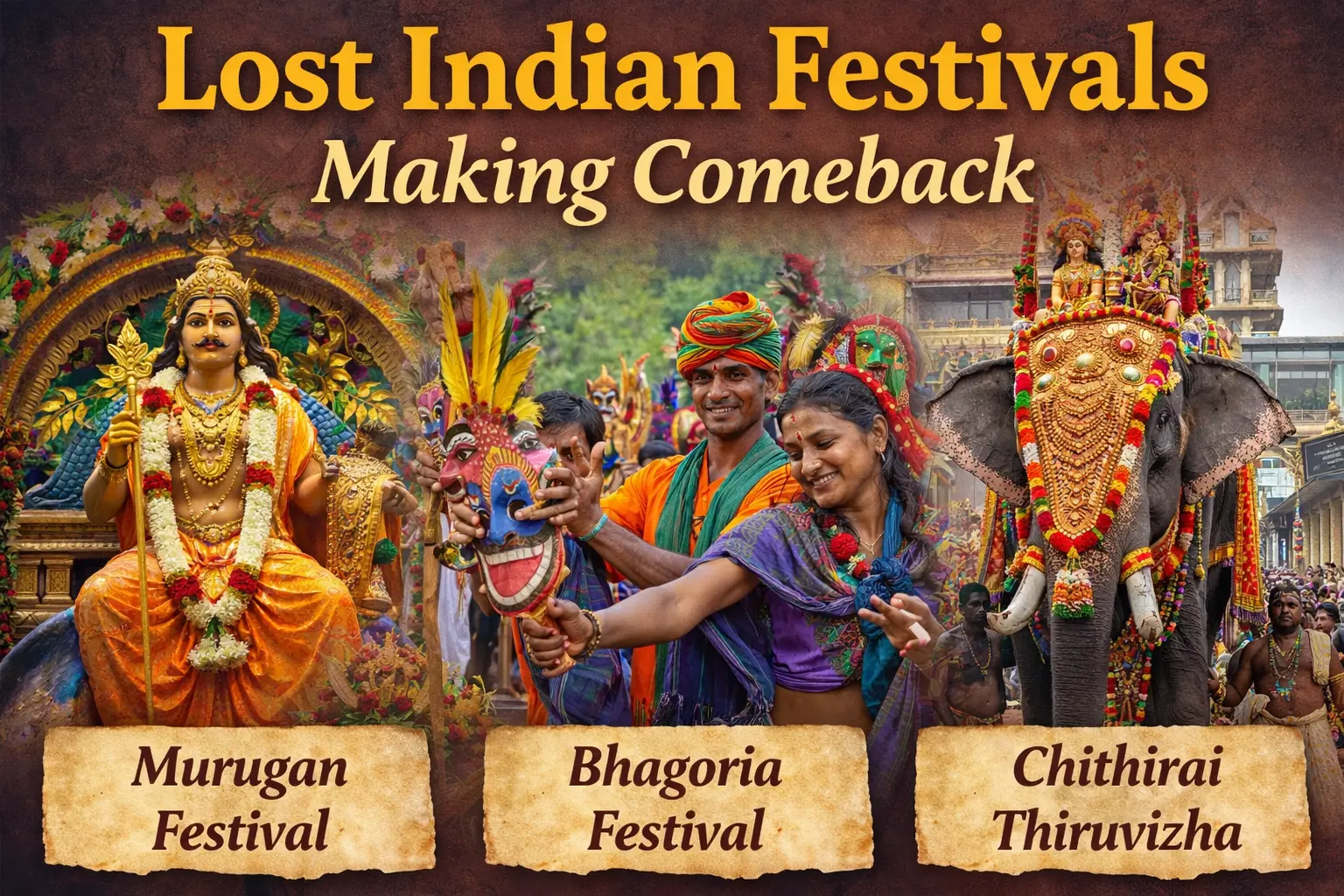
India is a country of lively festivals. We celebrate events from Diwali and Holi to Eid and Christmas. Our calendar is replete with festivities that unite citizens. However, beneath these popular festivities, numerous traditional festivals are slipping quietly into oblivion. These lesser-heard festivities were once extremely important to the cultural and spiritual life of people from all over the country. With modern ways of life and urban migration, these lost festivals can disappear forever. It is time to rediscover them and revive them.
Why Festivals Are Disappearing?
There are a number of reasons why the old-fashioned festivals are vanishing:
- Urban migration: People move to cities from ancestral villages, abandoning local practices.
- Lack of documentation: People do not write down oral traditions, and over time, they lose them.
- Religious homogenization: Dominant ones overshadow regional festivities.
- Modern distractions: Young people gravitate toward technology-based entertainment, diminishing the appeal of traditional observances.
5 Forgotten Indian Festivals That Require a Revival
1. Phool Dei (Uttarakhand)
Phool Dei is a spring festival observed in the Kumaon and Garhwal areas. During this festival, young girls leave flowers and rice on doorsteps. They seek prosperity through this act. It was a celebration of communal peace and nature’s abundance.
Why it matters:
It’s a lovely instance of eco-sensitivity and child-driven tradition that can be reinstated as a spring festival in all schools.
2. Sital Sasthi (Odisha)
People lavishly observe Sital Sasthi, the mythological wedding of Lord Shiva and Goddess Parvati, in western Odisha. The ceremonies entail baraat processions, pseudo-marriages, and oral narration.
Why it matters:
A unique occurrence of mythology narrated in live performance, providing exposure to folk artists and local culture.
3. Gandhal Festival (Maharashtra)
This neglected rural festival included all-night kirtans (devotional songs) further featuring conventional dances in honor of village deities. These events were conducted predominantly in Marathwada and Vidarbha.
Why it matters:
It celebrates indigenous music forms and is a spiritual retreat, something the contemporary world cannot do without.
4. Agera Festival (East Indian Community of Mumbai)
Originally much revered by the East Indian Catholic community, Agera is the first harvest. Celebrations were through folk dances, church celebrations, and distribution of produce.
Why it matters:
Agera has the potential to connect religion, agriculture, and food sustainability in cities.
5. Indra Jatra (Assam & Tripura)
Indra Jatra among certain tribal enclaves in the Northeast was held to appease the rain god. It aimed to bring good harvests. It included rain-sheets invoking rituals and lanterns in the sky.
Why it matters:
People can revive this as part of climate-sensitive festivities, particularly in drought- or flood-affected areas.
What Can We Do to Revive These Festivals?
- Record Oral Histories: Interview the elders and document local customs before they fade away.
- School Celebrations: Storytelling and craft-based introduction of such festivals can get kids interested in them.
- Local Artist Engagement: Traditional musicians, dancers, and dramatists are the ones who can preserve traditions.
- Digital Media Utilization: Short videos, reels, and blogs can raise awareness among youth audiences.
- Community-Oriented Events: Local municipalities and NGOs should also be encouraged to hold revival events.
Final Thoughts
India’s cultural heritage is not what we watch on TV. It’s not what we post on Instagram either. It’s found in the lesser-known, subdued, near-forgotten practices of our forefathers. Reviving these dying traditions is not merely nostalgia; it’s about keeping diversity, identity, and values alive in a homogenizing world. As trustees of our heritage, the moment to act is now.