Every year, millions of people take part in the colorful celebration of Navratri. The atmosphere is electric as various rituals are performed for nine nights. Most visually striking of all, a specific color code is followed for each day. It is easy to see these daily colors as just beautiful traditions and spiritual devotion to the different forms of the Goddess. However, there is a fascinating scientific aspect to them as well. Ancient traditions were carefully designed to align human biology with the cosmos. Navratri falls during major seasonal changes (the shift into spring or autumn), when human immunity and moods change. Let’s figure out the deep scientific and psychological meaning behind the colors of Navratri and how they affect our biology.
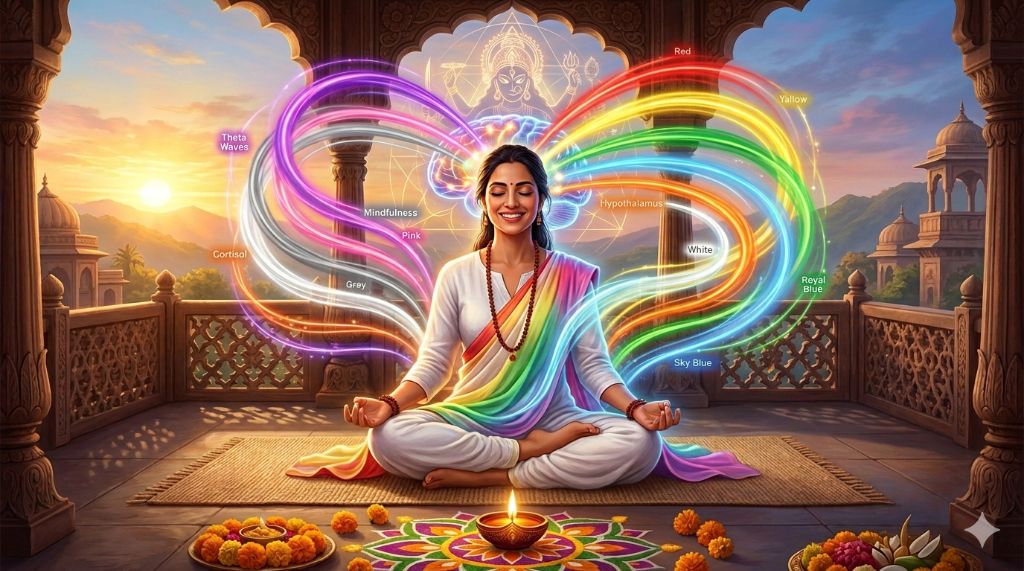
Colors aren’t just pretty pictures; they’re light energy at certain wavelengths. When light hits the retina in the human eye, it sends neurochemical signals to the hypothalamus in the brain. This is the master gland that controls our hormones, body temperature, sleep, and emotions. By changing the colors we wear and surround ourselves with, we are effectively feeding our nervous system different energetic frequencies.
Decoding The 9 Colors of Navratri
Here is a breakdown of the nine traditional Navratri colors and the tangible, physiological impact their specific wavelengths have on the human body and mind.
1. Red (The Wavelength of Vitality)
- The Spiritual Context: Symbolizes the fierce power, action, and vigor of the Goddess.
- The Science: Red has the longest wavelength in the visible spectrum.
2. Yellow (The Spectrum of Serotonin)
- The Spiritual Context: Represents brightness, happiness, and cheer.
- The Science: Yellow is highly visible and the first color the human eye processes. It really gets the left side of the brain going, which is where logic and intelligence come from. The spiritual context: it stands for happiness, brightness, and cheer. Yellow helps release serotonin, the “happy chemical,” which can help improve your mood and fight off seasonal blues.
3. Green (The Frequency of Balance)
- The Spiritual Context: Symbolizes growth, fertility, and harmony with nature.
- The Science: Green sits right in the middle of the visible spectrum. The human eye is most sensitive to green, meaning it requires the least amount of effort to process. It has a proven relaxing effect on the nervous system, actively lowering cortisol (stress hormone) levels and creating a sense of internal homeostasis.
4. Royal Blue (The Parasympathetic Trigger)
- The Spiritual Context: Embodies divine grace, calmness, and vast wisdom.
- The Science: Blue operates on a short wavelength. Opposite to red, blue light activates the parasympathetic nervous system—our “rest and digest” state. It has been shown to lower body temperature, decrease blood pressure, and slow down respiratory rates, creating a state of deep physiological calm.
5. Orange (The Metabolic Catalyst)
- The Spiritual Context: Radiates energy, enthusiasm, and creativity.
- The Science: A perfect blend of the physical energy of red and the mental clarity of yellow. Orange has been shown in clinical settings to increase oxygen supply to the brain, stimulate mental activity, and even slightly boost the body’s metabolic rate.
6. White (The Eraser of Cognitive Fatigue)
- The Spiritual Context: Represents peace, prayer, and absolute purity.
- The Science: White is the combination of all visible wavelengths of light being reflected back at once. In a world full of visual noise, white acts as a clean slate for the brain. It reduces sensory overload and cognitive fatigue, making it the perfect environment for deep, focused meditation.
7. Grey (The Neural Neutralizer)
- The Spiritual Context: Represents the balanced mind and calm detachment.
- The Science: Grey is the ultimate neutral hue. In psychology, it is used to quiet hyperactive brain waves. When we are feeling very emotional or stressed out, grey helps us step back, look at things, and think logically instead of reacting emotionally.
8. Pink (The Soother of Aggression)
- The Spiritual Context: Connects with universal love, compassion, and gentleness.
- The Science: Pink has a documented tranquilizing effect. A famous psychological study on a specific shade known as “Baker-Miller Pink” showed that staring at it actively reduced aggressive behavior and muscle strength in agitated subjects.
9. Purple (The State of Deep Insight)
- The Spiritual Context: It stands for ambition, power, and deep spiritual fulfillment.
- The Science: Purple/Violet has the shortest wavelength and the highest frequency of visible light. It is closely linked to the brain’s ability to make theta waves, which are dominant during deep meditation and REM sleep. It encourages high-level cognitive processing and introspection.
Navratri Color Science at a Glance
| Day / Color | Brain/Body Response | Scientific Benefit |
| Red | Elevates heart rate, stimulates adrenaline | Combats seasonal fatigue; increases alertness |
| Yellow | Triggers serotonin release | Boosts mood and mental clarity |
| Green | Lowers cortisol levels | Reduces stress; promotes healing and balance |
| Royal Blue | Activates parasympathetic nervous system | Decreases blood pressure; promotes deep calm |
| Orange | Increases oxygen supply to the brain | Sparks creativity and boosts metabolism |
| White | Prevents sensory overload | Reduces cognitive fatigue and sharpens focus |
| Grey | Quiets hyperactive brain waves | Fosters emotional stability and detachment |
| Pink | Induces physical muscle relaxation | Lowers aggression and fosters empathy |
| Purple | Encourages theta brain wave production | Enhances problem-solving and deep reflection |
Navratri is an ancient, highly sophisticated system of “environmental hacking” hiding in plain sight as a festival. The ancient seers came up with a way to systematically stimulate, balance, and heal the human nervous system during difficult seasonal changes by cycling through these colors. So, this Navratri, when you reach into your closet to find the right color for the day, remember that you are not only taking part in a beautiful ritual, but you are also actively fine-tuning your brain, balancing your hormones, and aligning your biology with the natural rhythms of life.
- The Science of Navratri Colors | Neurobiology & Tradition
 Explore the scientific meaning of Navratri colors. Learn how chromotherapy and specific light wavelengths affect your brain and biology during the festival.
 - Akshaya Tritiya 2026 Tithi, Puja Muhurat, and Best Time to Buy Gold
 Planning for Akshaya Tritiya 2026? Get the exact Puja Muhurat, Tithi timings, and the best time to buy gold on April 19. Don’t miss the most auspicious window of the year!
 - Navratri | Types, Significance, and Regional Celebrations
 Why does India celebrate nine nights of the Goddess? Dive into the symbolism of the Navadurga, the hidden “Gupt” Navratris, and the colorful traditions that unite the country in worship and dance.
 - Sandhi Kaal in Navratri 2026 | The Sacred Transition from Ashtami to Navami Explained
 Discover Sandhi Kaal during Navratri 2026 — the powerful shift from Maha Ashtami to Navami. Learn its rituals, significance, and spiritual power in Durga Puja.
 - Sharadiya Navratri 2026 | Dates, Rituals, and Why This Festival Matters
 Get ready for Maha Navratri 2026! Discover the full October calendar, the significance of the 9 nights, and how to celebrate Durga Puja and Garba.
 - Ram Navami 2026 Date, Story, Puja Vidhi & Spiritual Importance
 Know the Ram Navami 2026 date, पूजा विधि, शुभ मुहूर्त, and the inspiring story of Lord Rama. Learn why this festival holds deep spiritual importance.
Frequently Asked Questions: Navigating Your Path
Ques: Is this website affiliated with a specific religion?
Ans: No, While we draw deep inspiration from various ancient wisdom traditions including Vedic philosophy, IndiaXplores is secular and universal in its approach. We believe that spirituality is a fundamental aspect of the human experience that transcends religious boundaries. Our goal is to provide tools that resonate with your internal truth, regardless of your personal faith or background.
Ques: What makes your approach to spirituality different?
Ans: We focus on the “Integrative Path.” We don’t think of spiritual growth as separate from mental or physical health. We connect the mystical and the mechanical by using modern science, like neuroscience and physiology, to explain the “why” behind rituals. We think that understanding how a practice affects your heart rate or nervous system makes it easier to do and last longer.
Ques: I’m a complete beginner. Where should I start?
Ans: The best place to start is always with the breath. It is the only way to connect your conscious mind to your autonomic nervous system. We suggest starting with our “Five-Minute Mindfulness” guide or our “Breathwork 101” article. These resources will help you build a base of awareness without getting overwhelmed by complicated techniques.
Ques: How often should I do rituals or meditate?
Ans: Consistency is more important than intensity. Five minutes of mindful observation every day can often change your life more than an hour of meditation once a week. We recommend choosing one small ritual, like a morning sun salutation or a nightly gratitude reflection, and doing it every day for 21 days to give your brain time to get used to the new habit.
Ques: What does “Color Therapy” mean in your teachings?
Ans: As we talked about when we looked into traditions like Navratri, colors are specific wavelengths of light. Chromotherapy (color therapy) is based on the fact that different wavelengths cause different neurochemical reactions in the brain. You can change your mood, energy levels, and even your heart rate by consciously choosing the colors you wear or surround yourself with.
Ques: Can spiritual practices really improve my physical health?
Ans: Yes, but they are not a replacement for professional medical care. Deep rhythmic breathing and meditation, for example, have been shown to activate the parasympathetic nervous system (the “rest and digest” state). This lowers cortisol levels, reduces systemic inflammation, and makes the heart more resilient. When the mind is calm, the body’s natural healing processes can work better.
Ques: How does breathwork affect my heart?
Ans: There is a fascinating link known as Heart Rate Variability (HRV). When you engage in slow, deep breathing, you create coherence between your breath and your heart rhythm. This “heart-brain” coherence signals to your brain that you are safe, which instantly calms the nervous system and improves your emotional regulation. It is a physical manifestation of spiritual alignment.
Ques: How can I contribute to the website?
Ans: We love hearing from our community! Please use our Contact page to share a personal story of change or an insight into a specific practice. We carefully choose the content we publish to make sure it is accurate and real, but we are always open to guest perspectives that fit with our mission of integrative wellness.
Ques: Is my data safe when I sign up for your newsletter?
Ans: Absolutely, We treat your digital space with the same respect as a sacred temple. We never sell your information to other companies, and we use high-level encryption to protect all of your data. You can read our full Privacy Policy to learn more about how we protect your information.
Ques: What should I do if I feel “nothing” during meditation?
Ans: Feeling “nothing” is actually a very important stage! It often means you are becoming aware of the space between your thoughts. The goal of meditation isn’t always to have a profound “vision” or a feeling of bliss; often, the goal is simply to be an observer. If you feel bored or restless, notice that feeling without judgment. That observation is the meditation.
Ques: Why are there disclaimers on all the health-related posts?
Ans: Transparency and safety are our core values. Because we discuss practices that affect the body’s systems—like the respiratory and cardiovascular systems—it is vital that our readers understand their own limits. We always encourage you to consult with a healthcare professional before starting intensive physical practices, especially if you have pre-existing conditions.
| Practice | Physical Benefit | Spiritual Benefit |
|---|---|---|
| Breathwork | Lowers blood pressure & cortisol | Grounds the energy in the present |
| Color Therapy | Stimulates specific neural pathways | Aligns personal energy with nature |
| Daily Meditation | Improves sleep & immune function | Increases “Heart-Brain” coherence |
| Journaling | Reduces cognitive load/stress | Provides clarity on the soul’s path |
Don’t see your question here? Please feel free to reach out to us directly through our Contact Page. We are constantly updating this FAQ based on the needs and curiosity of our growing community. Namaste!